
* required field
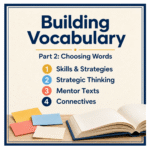
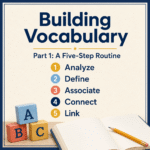
Determined. Confident. Despondent. Collaborative. Majestic. These are Tier Two words – words students can use across the day whether they are discussing a character in a novel or what happened on the playground or how they are feeling about solving a math problem (Beck & McKeown, 2013). Teaching words like these in a simple, consistent …Read more

Are your students regurgitating facts from a text without really thinking about main ideas? When you ask about the main idea of a text (or section), do you get a shrug? What follows is a description of a conference I held with a student in which we explore what the main idea is in a …Read more

Teaching students to identify the main ideas in a text is sometimes hard. The more explicit we can be, the better students will catch on. My key strategies for teaching main idea include the following… Two-Page Resource This is a short comprehension module on teaching main idea. It includes language you can use to explain …Read more
I don’t believe we should wait until the “unit on main idea” to teach this concept. Instead, every time we read an informational source with students, we should facilitate a discussion about the main ideas in that source. Why? Because the main idea is the soul of a source. Main ideas empower readers to – …Read more

Several years ago I watched 60 Seesaw videos of fifth grade students reflecting on a THIEVES lesson. I’d posed these questions for reflection: “Were your predictions on track? How were they helpful (or not) to you as a reader?” What I noticed was that many students commented about whether their predictions were “right” or “wrong.” …Read more

When we preview a text (or source) to make predictions about its content, recognizing clues about the text’s structure can launch us into making helpful predictions – predictions that can help us activate background knowledge and aid us in setting a clear purpose for reading and determining what is important in a source. Kid-friendly tool …Read more

Do your students’ predictions ever feel superficial? Thoughtful, text-based predictions can make a big difference in students’ comprehension of complex informational sources but frequently our students only make shallow predictions – predictions that don’t offer much bang for their buck. For example, take a look at the two predictions below. Why would the second one …Read more
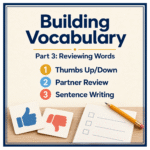
Introducing a new vocabulary word is only the beginning. Even when students understand a word during the initial lesson, they need repeated opportunities to retrieve its meaning, hear it in new contexts, and use it as they talk and write. Without this review, even a carefully selected and thoughtfully introduced word may not stick. In …Read more